The Syrian Writers Association
In the autumn of 2012, nine months into a war that was already scattering Syria's writers across the earth, a group of them did something that might seem, at first, out of proportion to the catastrophe unfolding around them: they founded an association. Bombs were falling and cities were emptying, and yet a handful of poets, novelists and thinkers decided that one of the things worth building, precisely now, was a free and independent home for Syrian literature. The Syrian Writers Association was born in London on 17 October 2012 and began its public activity on 18 January 2013. Nouri al-Jarrah was at the centre of its creation — and later became its president.
The founding gesture was, above all, a declaration of independence. For decades the official body representing Syrian writers had been the Arab Writers Union, established in Damascus in 1969 and, in the eyes of the association's founders, long since absorbed into the state's machinery — a totalitarian, exclusionary institution that reflected the regime rather than the writers. The Syrian Writers Association set itself up explicitly as a democratic alternative: a free cultural association, registered as a civil institution in Britain, open to every Syrian writer regardless of literary school or intellectual current, and devoted in its founding statement to "freedom of expression and opinion" without condition or restriction.
Bombs were falling and cities were emptying, and yet they decided that a free home for Syrian literature was worth building — precisely now.
A call raised by seven
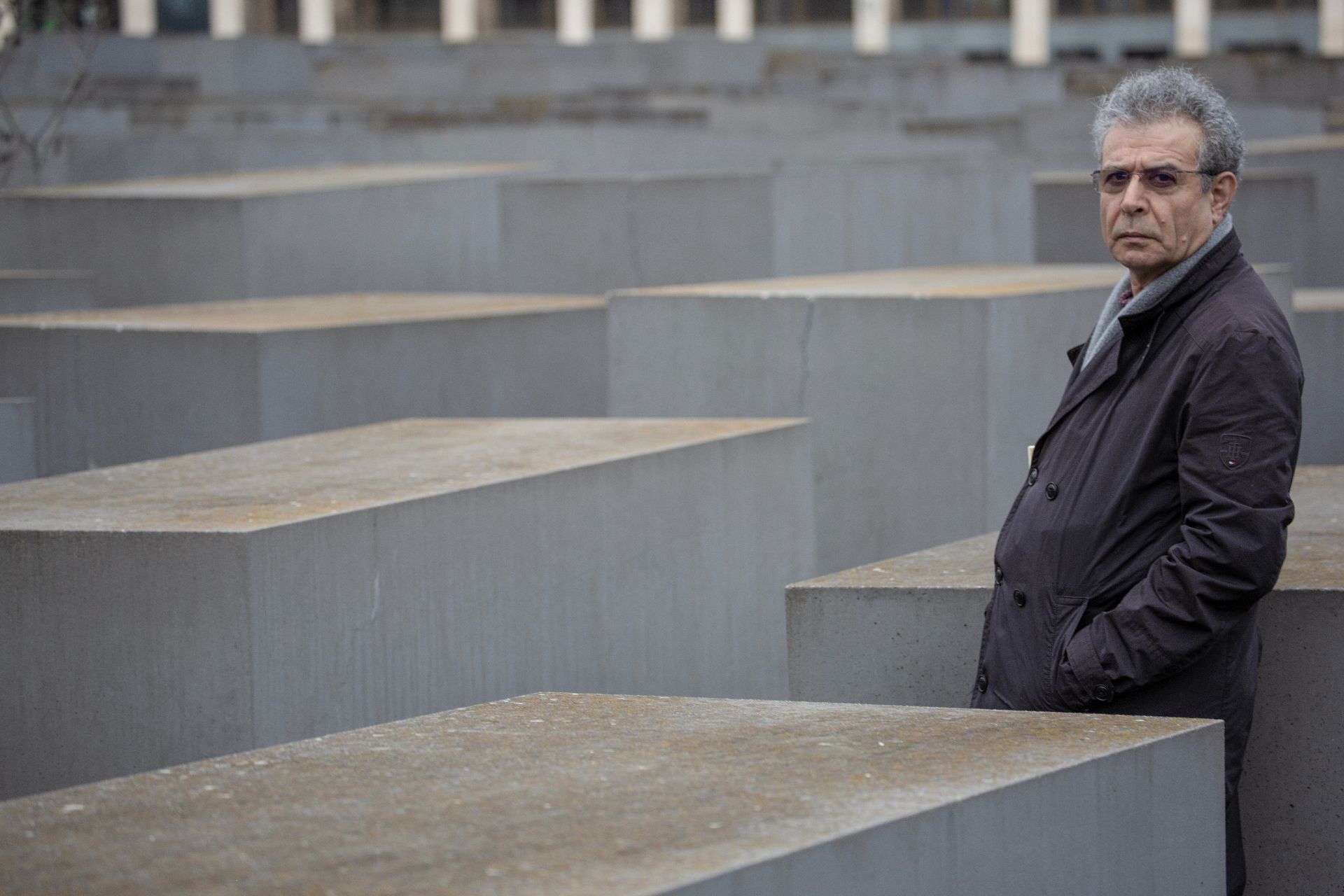
The association grew from a call raised by seven Syrian intellectuals scattered across the map of exile: the philosopher Sadiq Jalal al-Azm in Berlin, Nouri al-Jarrah in London, the writer Yassin al-Haj Saleh in Damascus, Hossam al-Din Mohammad and Khaldoun al-Shamaa in London, the poet Faraj Bayrakdar in Sweden, and Mufid Najm in Abu Dhabi. That geography — Berlin, London, Damascus, Sweden, Abu Dhabi — was itself the point: this was a body assembled from a nation in dispersion, holding together across borders what the war was trying to break apart. More than two hundred writers joined as founding members. Because normal assembly was impossible, the association held its elections by electronic vote, with the results announced in Cairo under the supervision of a panel of prominent Arab writers.
Al-Jarrah led the idea of founding the association in 2012, in open support of the Syrian uprising, and coordinated the entire founding phase — the delicate work of assembling a legitimate, pluralist body out of a traumatised and scattered literary community. Sadiq Jalal al-Azm was elected its first president; al-Jarrah would later be elected to succeed him. He described the association as "the first democratic offspring of the revolution," and said its elections had "transcended the one-party nature" of the old unions — a small but real experiment in doing culture democratically at the very moment the country was being torn apart.
Principles and voice
The association's principles reflect the pluralism it was built to defend. Membership is open to all Syrian writers of every literary and intellectual tendency; it is open to Arab and non-Arab writers who support the Syrian people as honorary members; and it recognises the cultural plurality on which Syria rests, granting full membership, for instance, to Palestinian writers permanently resident in Syria. This insistence on inclusion — the reason it held so firmly to the name "Syrian" — was a deliberate answer to the exclusionary model it had broken away from.
The association gave itself a voice on the page as well as in its structure. It publishes the cultural journal Awraq, whose very subtitle calls for freedom of expression without condition or restriction, and which has become one of the platforms through which the independent Syrian literary voice continues to speak from exile. For al-Jarrah, whose own life had been shaped by exile since the early 1980s and whose poetry turned increasingly, after 2011, toward the Syrian tragedy, the association was of a piece with everything else he had built: a place where culture could remain free, plural, and alive, even when the homeland itself could not.
More Projects
The Centre for Arabic Geographical Literature — Irtiyad al-Afaq
When Nouri al-Jarrah speaks about the Centre for Arabic Geographical Literature, he tends to describe it not as an institution but as a rescue mission…
The Ibn Battuta Prize for Travel Literature
Every literary prize makes an argument about what deserves to be remembered. The Ibn Battuta Prize for Travel Literature makes one of the most unusual…